At a Glance: The Need to Embed Pupil Voice in Schools
Family Action partnered with Participation People to strengthen pupil voice in schools across the National School Breakfast Programme (NSBP), a Department for Education-funded initiative reaching over 350,000 pupils every day across 2,700 schools.
Historically, pupil and parent engagement relied heavily on surveys, which made it difficult to understand the lived experiences behind attendance patterns, barriers to access and opportunities for improvement.
Participation People worked with the NSBP team to develop a trauma-informed, stigma-aware participation approach that would help schools gather richer insight, amplify pupil voice and create visible routes for influence.
The result was a practical participation framework, a suite of ready-to-use engagement tools and a shared organisational approach to pupil voice that can be embedded across diverse school settings.
About Family Action
Family Action is a national charity supporting children, families and communities through practical, emotional and financial support.
Through the National School Breakfast Programme, funded by the Department for Education, Family Action helps ensure children have access to free, healthy and stigma-free breakfasts, supporting wellbeing, concentration and readiness to learn.
However, breakfast provision is about more than food. For many pupils, it can be a gateway to attendance, belonging, social connection and a positive start to the school day.
Recognising that these experiences are best understood by the children themselves, Family Action partnered with Participation People to strengthen how pupil insight is gathered, understood and acted upon across the programme.
The Challenge: Moving Beyond Surveys
The National School Breakfast Programme had already gathered valuable data through surveys and reporting mechanisms.
Yet the team recognised that numbers alone could not explain:
- Why some pupils chose not to attend breakfast clubs
- How stigma affects participation
- The experiences of pupils with SEND, ARFID and sensory needs
- Environmental barriers such as noise, timing and crowded spaces
- What pupils themselves would change about the breakfast experience
There was also a wider challenge around visibility.
While feedback was being gathered, pupils rarely saw how their views influenced decisions. This matters because when children don’t see the impact of their feedback, participation can begin to feel performative rather than meaningful. Valuable insight is lost, trust can diminish, and opportunities to improve experiences for pupils may be missed.
The goal was not simply to collect more feedback. It was to create meaningful, safe and practical ways for pupils to influence the programme, helping schools make better decisions based on the lived experiences of the children they serve.
The Aim: Strengthening Pupil Voice in Schools
The project aimed to:
- Strengthen meaningful engagement with pupils across diverse school settings
- Introduce trauma-informed and stigma-aware participation approaches
- Equip staff with practical tools that schools could deliver easily
- Improve visibility of feedback and influence
- Build confidence and consistency across the NSBP team
- Align engagement practice with Lundy’s Model of Participation
The Strategy: Building the Foundations for Meaningful Participation
Participation People began by reviewing existing reports, data and strategic priorities. This revealed important insights around awareness, access, SEND inclusion and wellbeing.
Specifically:
- Up to 31% of parents were unaware that breakfast provision was available.
- Transport schedules, crowded halls and concerns about stigma were all barriers to pupils.
- There was a need for sensory sensitivities, autism-related challenges, ARFID and the need for quieter spaces.
- Pupils consistently linked breakfast to energy, mood and readiness to learn.
These findings informed the development of a comprehensive participation approach centred on safety, inclusion and practical implementation.
Instead of creating a one-size-fits-all model, the approach was designed to help schools understand the experiences behind the data — ensuring barriers to access, wellbeing and participation could be identified earlier and addressed more effectively.
What We Built Together
Training and Capacity Building
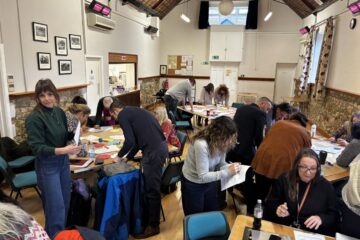
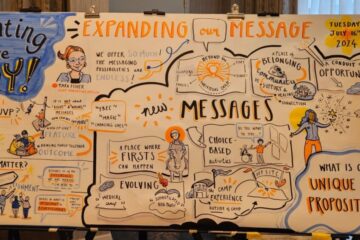
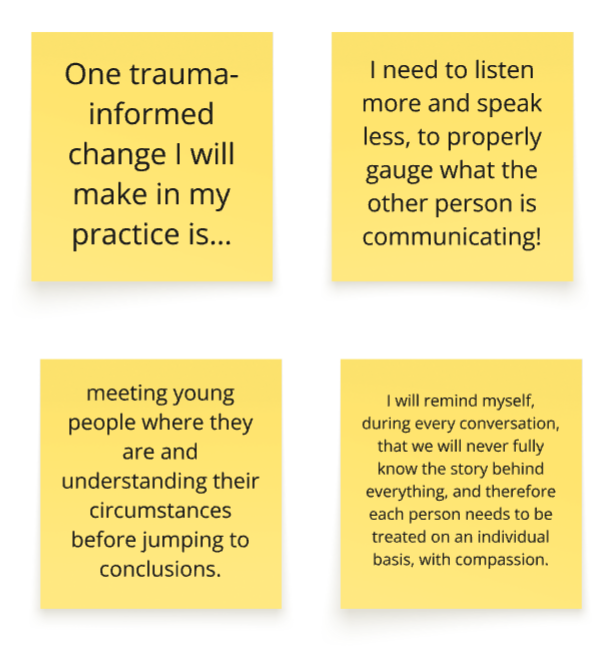
Participation People delivered interactive training for Family Action staff, supported by our Young Consultants who shared their lived experience and perspectives directly with participants.
The training explored:
- Meaningful pupil voice and participation
- Trauma-informed and stigma-aware engagement
- Practical consultation methods for schools
- How to close feedback loops effectively
- Creating safe opportunities for children and young people to influence decision-making
By combining professional expertise with young people’s lived experience, the sessions helped build confidence, consistency and thus shared understanding across the NSBP team.
A Trauma-Informed Participation Framework
Rather than creating participation resources in isolation, Participation People worked alongside Family Action staff to co-create a trauma-informed framework that could be applied consistently across the National School Breakfast Programme.
This included:
- Participation Do’s and Don’ts
- Safety checklists
- Consent guidance
- Universal language principles
- Trauma-informed engagement standards
Together, these resources helped establish a shared approach to participation, giving staff the confidence to engage pupils safely, ethically and consistently across a wide range of school settings.
A Participation Method Menu
To move beyond surveys, Participation People developed a menu of low-lift, high-impact participation activities suitable for different school environments.
Examples included:
- Emoji Walls
- Pulse Polls
- Tutor Exit Tickets
- Peer Interviews
- Assembly Shout-Outs
- Breakfast Vlogs
- Gamified consultation activities
The goal wasn’t to give schools more work. It was to give them practical, flexible ways to hear from pupils in the flow of everyday school life, helping them uncover insights that traditional surveys often miss.
A Participation Resource Toolkit
To support long-term implementation, Participation People developed a practical toolkit that schools and programme staff could use independently.
The toolkit included:
- “You Said, (Together) We Did” templates
- Feedback activities
- Facilitation scripts
- Participation planning tools
- Ready-to-use consultation resources
By providing ready-made resources, instead of theoretical guidance alone, the toolkit helped make meaningful pupil participation achievable, even in busy school environments.
Young Consultant Validation
Young Consultants then reviewed and tested the resources, providing direct feedback on language, accessibility and authenticity.
This ensured the final resources resonated with children and young people rather than reflecting adult assumptions.
Fundamentally, it modelled the very principle the project was promoting: that services are stronger when young people are involved in shaping them, not simply responding to them.
Outcomes and Impact
For Pupils
The programme created more inclusive routes for pupils to share their experiences, ideas and barriers to participation.
Rather than relying solely on surveys, schools now have access to approaches that are more engaging, accessible and responsive to different communication styles and needs.
This is particularly important for pupils whose voices are often underrepresented, including younger children, pupils with SEND, and those who may struggle to communicate their experiences through traditional consultation methods.
For Schools
Schools gained practical, low-burden tools that can be integrated into existing routines without creating significant additional workload.
The approach supports more regular and meaningful engagement while remaining realistic for busy school environments.
Consequently, helping schools move beyond assumptions and better understand the factors influencing attendance, participation and pupil wellbeing.
For Family Action
The NSBP team now has a shared framework for pupil voice in schools, helping ensure participation is consistent, ethical and visible across the programme.
Through the toolkit, training and participation framework, Family Action has strengthened its ability to gather meaningful insight at scale while maintaining a child-centred approach across thousands of schools.
Testimonial
“Thank you so much for the very interesting and engaging training your team delivered. From the few members of staff I spoke with on the way to the station it was well received with information they found useful. The young presenters were excellent and I definitely learned a lot about the way young people now communicate.”
Mandy O’Callaghan, Operations Manager (National School Breakfast Programme)
Final Reflection: From Feedback to Influence
This project demonstrates that meaningful pupil voice in schools is about more than consultation.
By moving beyond surveys and creating practical, trauma-informed routes for participation, Family Action has laid the foundations for a breakfast programme that is shaped not only for children, but increasingly with them.
When pupils are given meaningful opportunities to share their experiences, schools gain richer insight into the barriers, needs and opportunities that data alone cannot reveal. The result? More inclusive decision-making, more responsive provision and services that better reflect the realities of the children they exist to support.
As the National School Breakfast Programme continues to evolve, pupil voice is now positioned not as an add-on, but as a driver of inclusion, wellbeing and continuous improvement across thousands of schools.
At Participation People, this is how we work: helping organisations move beyond surveys and one-off consultations to embedding youth voice into culture, systems and decision-making. Get in touch to explore more.