The brief
Salisbury Diocese recognises the critical importance of community and youth development in shaping the church’s future, and partnered with Participation People to undertake a comprehensive Youth Voice Audit and Roadmap to amplify youth voices and foster an inclusive church community.
The Diocese had faced challenges in involving young people effectively and sought to enhance its structures, systems, and processes for youth participation with Participation People’s help.
Our diagnostic process
To understand the current state of youth engagement in the Salisbury Diocese area, we ran a thorough diagnostic process:
Interviews: Engaging with 20 senior decision-makers, front-line officers, and young people with lived experience provided deep insights into the existing engagement practices.
Surveys: Gathering feedback from 587 young people and 14 youth and family workers. These detailed surveys highlighted the strengths and gaps in youth engagement.
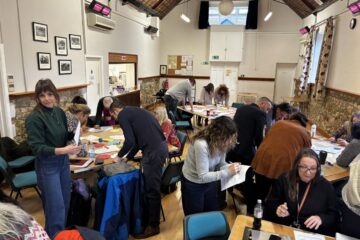
Focus groups: Conducting two focus groups involving 42 young people gave us qualitative data on their experiences and perspectives.
Desktop review: Analysing relevant documents and policies to inform our evaluation too.
Menu of opportunities
Based on the findings, we developed a strategic approach to address any challenges and size the available opportunities for community and youth development.
Youth voice framework: Co-designed with young people, this framework outlines clear strategies for enhancing youth engagement.
Youth voice roadmap: A collaboratively developed roadmap ensures alignment with the visions and goals of both young people and the Diocese.
Implementation
To bring our strategic initiatives to life, we recommended the following steps:
Policy review: A thorough review of existing policies related to youth engagement.
Youth-led workshops: Regular workshops facilitated by young people to gather feedback and input on strategic planning.
Youth lounges: Designated spaces within church buildings for young people to socialise and engage in church activities.
Digital engagement: Development of a co-produced audience strategy and a youth-led social media committee to enhance digital outreach.
Challenges and solutions
As with any complex project, several challenges were encountered along the way, and we collaborated with Salisbury Diocese to turn these into learning opportunities and solutions. The key challenges fell into three main categories, which we responded to in the following ways.
Engagement barriers: We restructured meetings and provided accessible platforms for youth participation – to ensure young people could engage with the Diocese in a way that worked for them.
Diverse needs: Tailored approaches were developed to cater to the varied needs of young people, ensuring inclusivity.
Feedback mechanisms: We worked to establish clear channels for young people to provide input and see the impact of their contributions.
Outcomes and impact
Through our work, Salisbury Diocese saw significant positive outcomes across community and youth development, with more young people actively engaging in church activities and decision-making processes.
By creating safe and inclusive spaces where young people felt valued and heard, the Diocese was able to enhance inclusivity, and create transparent communication channels with regular updates so young people felt more involved.
Ultimately, this project strengthened connections between young people, the church, and the wider community.
From here Salisbury Diocese plans to:
Expand youth engagement initiatives; Introducing more youth-led activities and leadership opportunities.
Strengthen digital outreach; developing engaging digital content and expanding its online presence.
Foster continuous improvement; regularly evaluating and refining strategies to ensure ongoing improvement in youth engagement.
Lessons learned
We gained some key insights from this project on the do’s and don’ts of youth engagement.
Dos:
- Actively involve young people in decision-making processes.
- Create safe and inclusive spaces for youth engagement.
- Use diverse communication methods to reach all young people.
Don’ts:
- Avoid tokenism in youth participation.
- Overlook the importance of tailored approaches for different youth groups.
- Neglect the need for transparency and follow-through on youth feedback.
Client testimonial
“On behalf of the DBF Leadership team, I sincerely thank Participation People for the outstanding work you have done through the Youth Audit and Roadmap.
The quality of the report and the work behind it is truly evident, and I believe that this will lay the foundation for our ongoing work.”
– Revd Canon Jonathan Triffitt, Director of Mission & Ministry, Salisbury Diocese.
Community and youth development
In summary, the journey to enhance youth engagement in the Salisbury Diocese has been transformative.
Through the Youth Voice Audit and Roadmap, the Diocese has established a strong foundation for meaningful youth participation. We are sure that continuous improvement and commitment to amplifying youth voices will ensure a vibrant and inclusive church community for generations to come.
If you’d like to know more about how this could work for you, please get in touch here.